





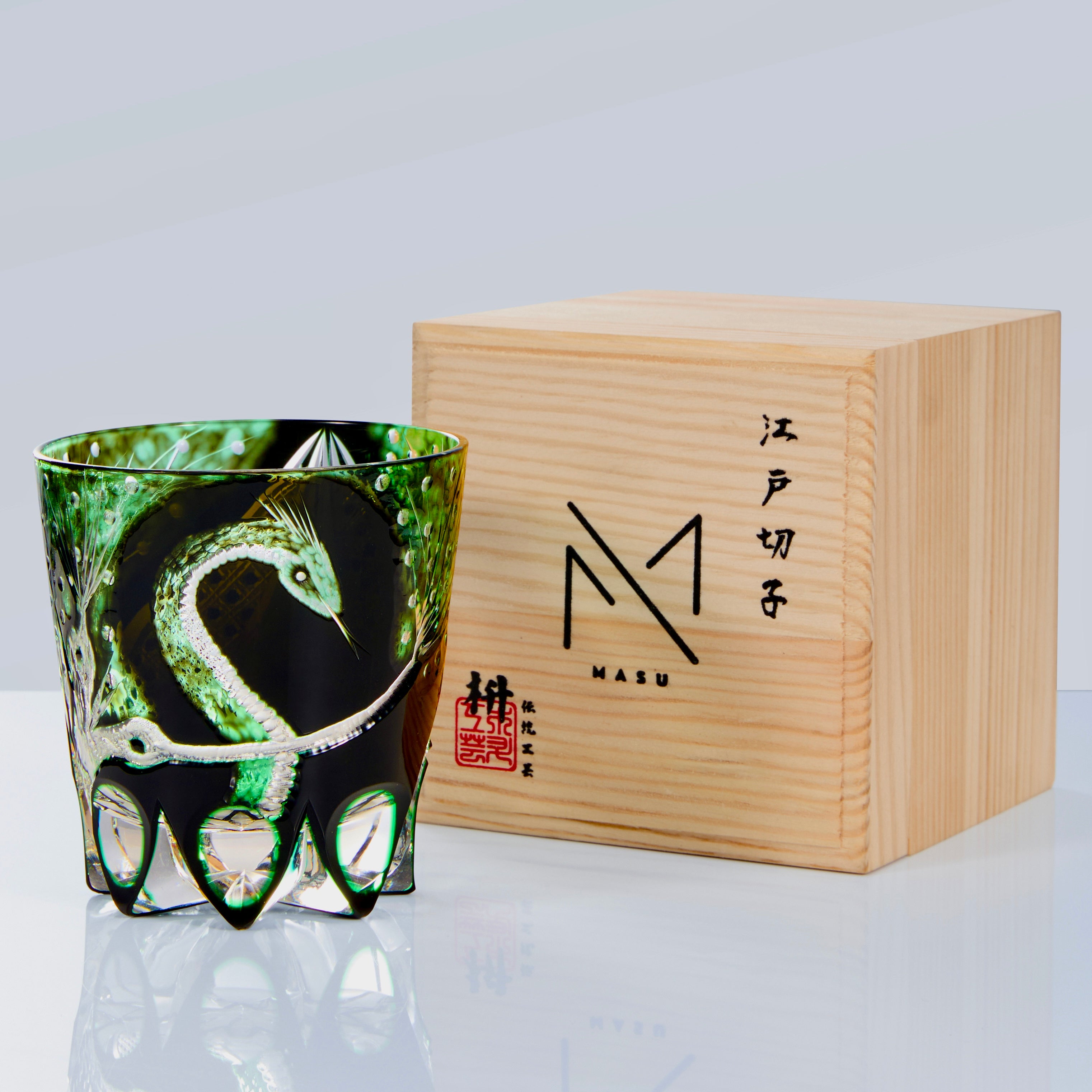
Edo Kiriko Handcrafted Green Serpent Whisky Glass With Wooden Box
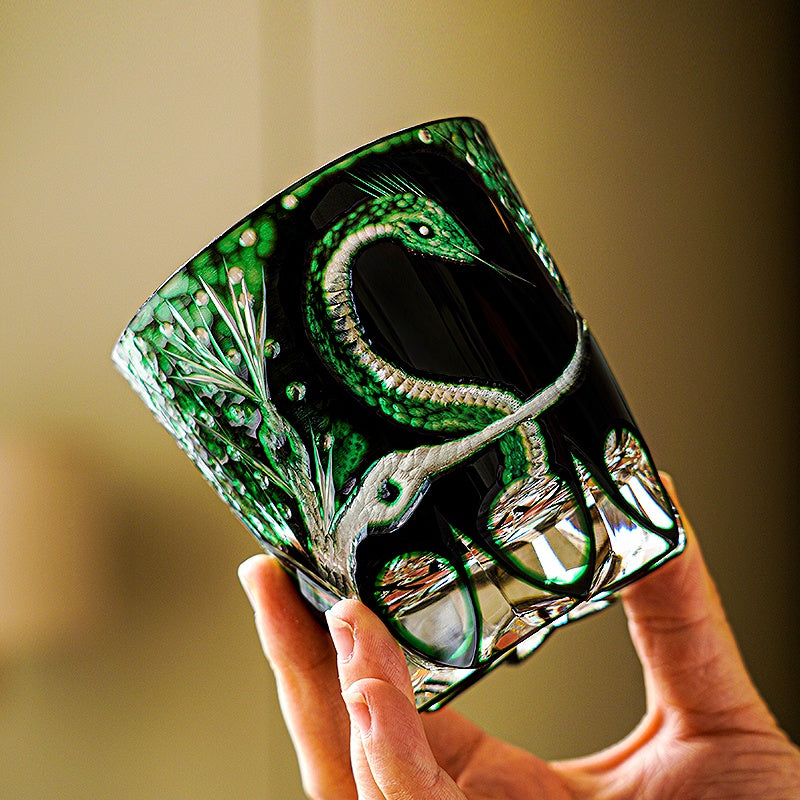
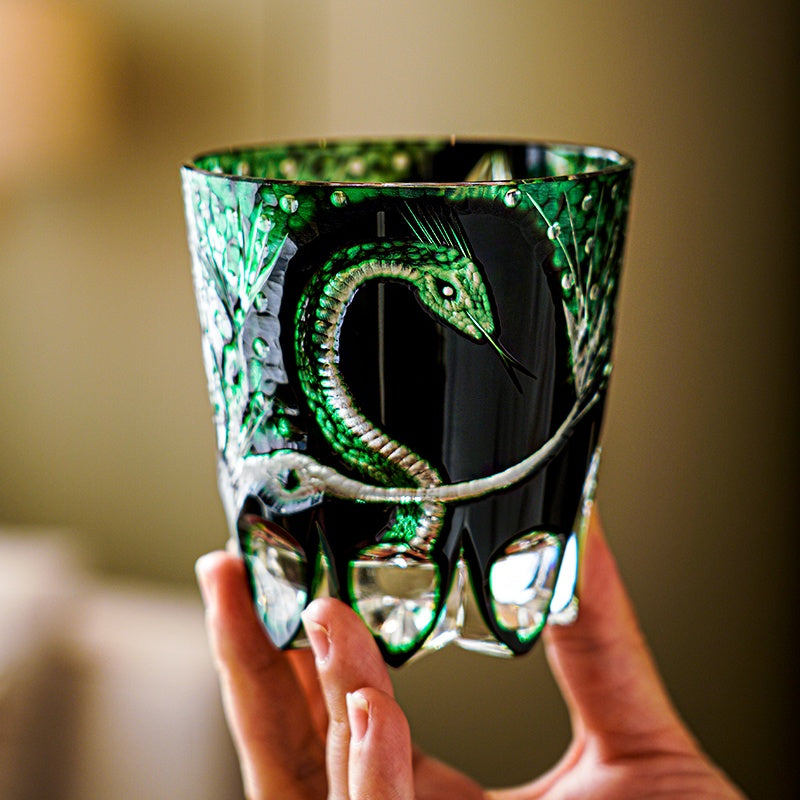
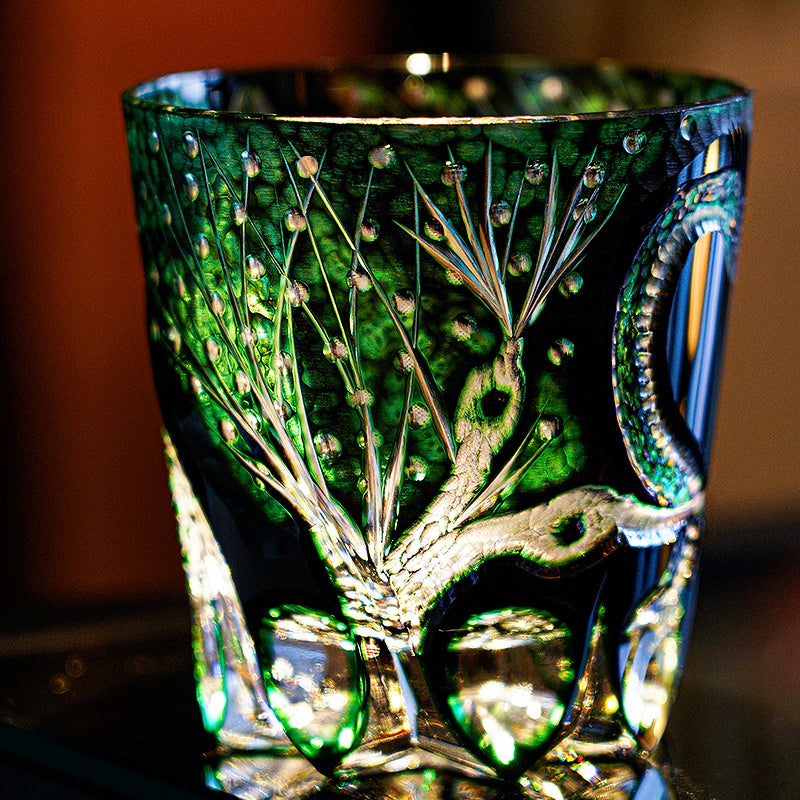
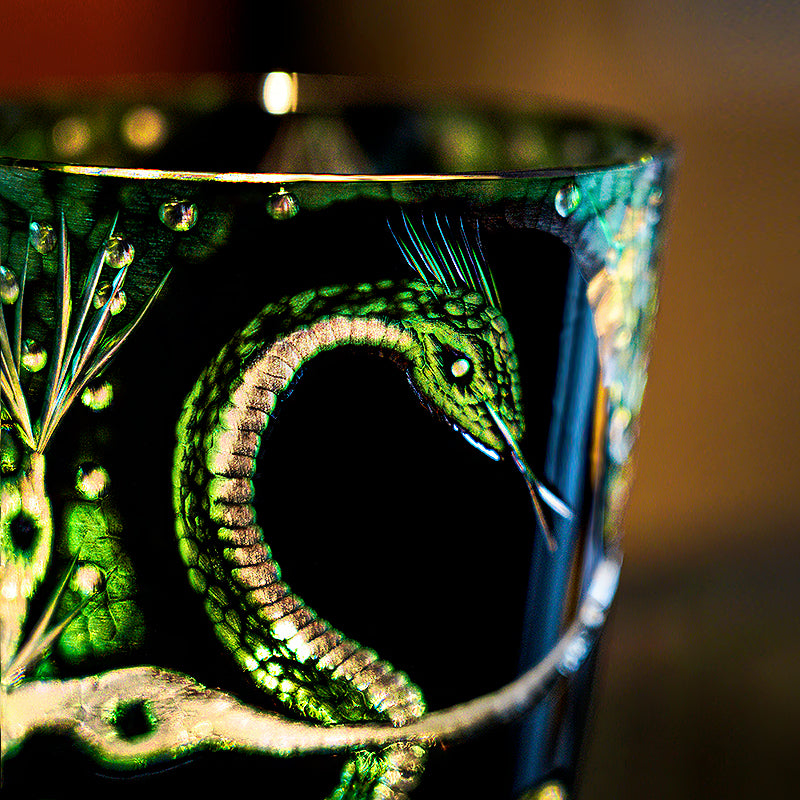
Unveil a bold symbol of transformation and strength with our Edo Kiriko Handcrafted Green Serpent Whisky Glass. This remarkable piece brings together centuries-old traditional cut glass artistry and a powerful serpentine motif, coiled elegantly around the deep emerald body of the glass.
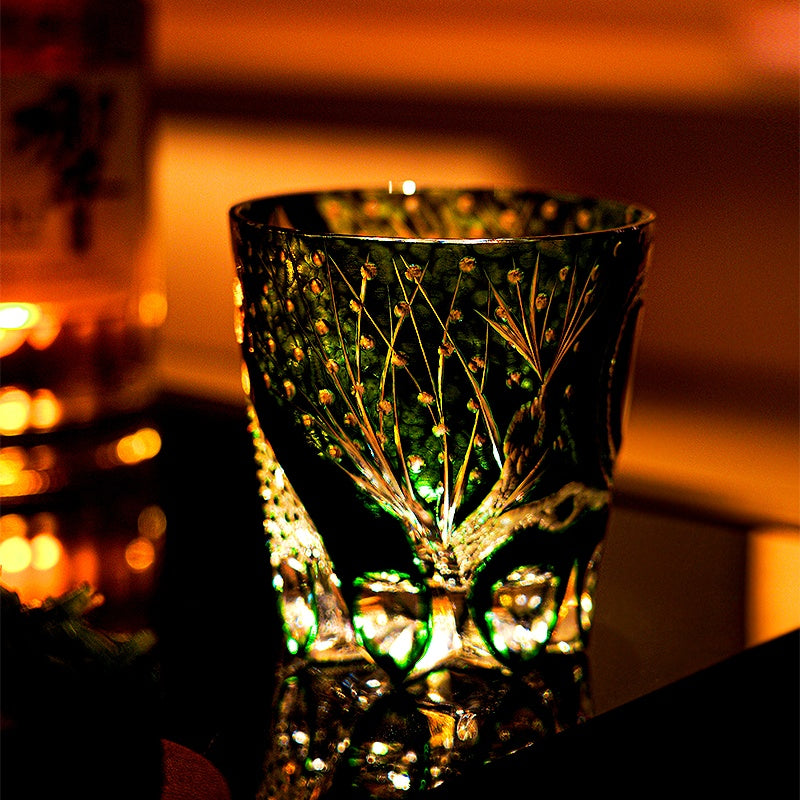
Every detail from the serpent’s scales to the delicate sakura-inspired blossoms is hand-carved by master artisans, showcasing the highest level of Edo Kiriko craftsmanship. The swirling serpent, etched with lifelike motion, appears to slither gracefully across a backdrop of layered textures and luminous green glass, creating a stunning interplay of shadow, light, and reflection.
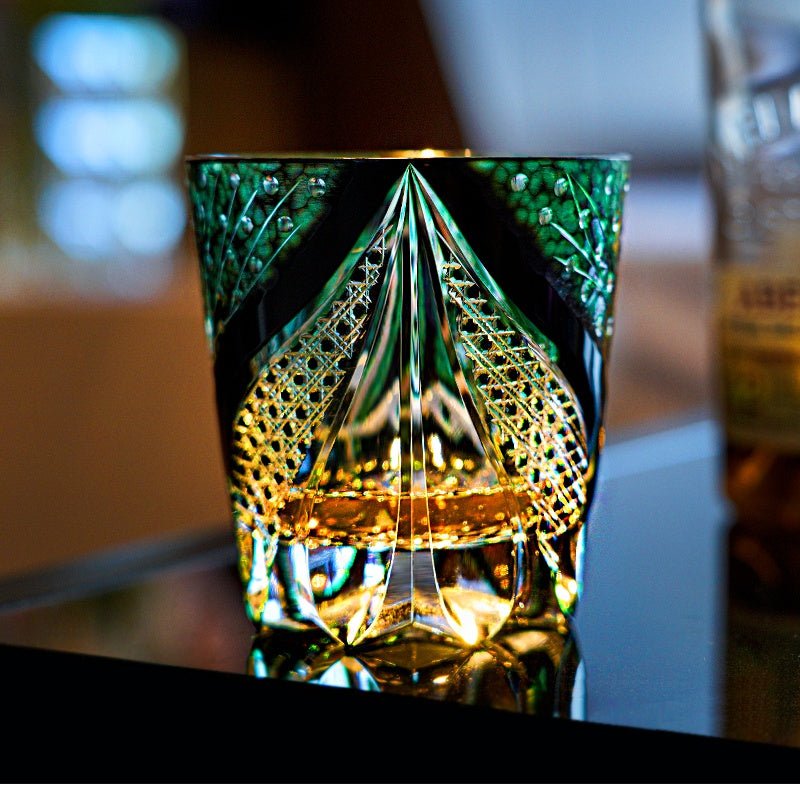
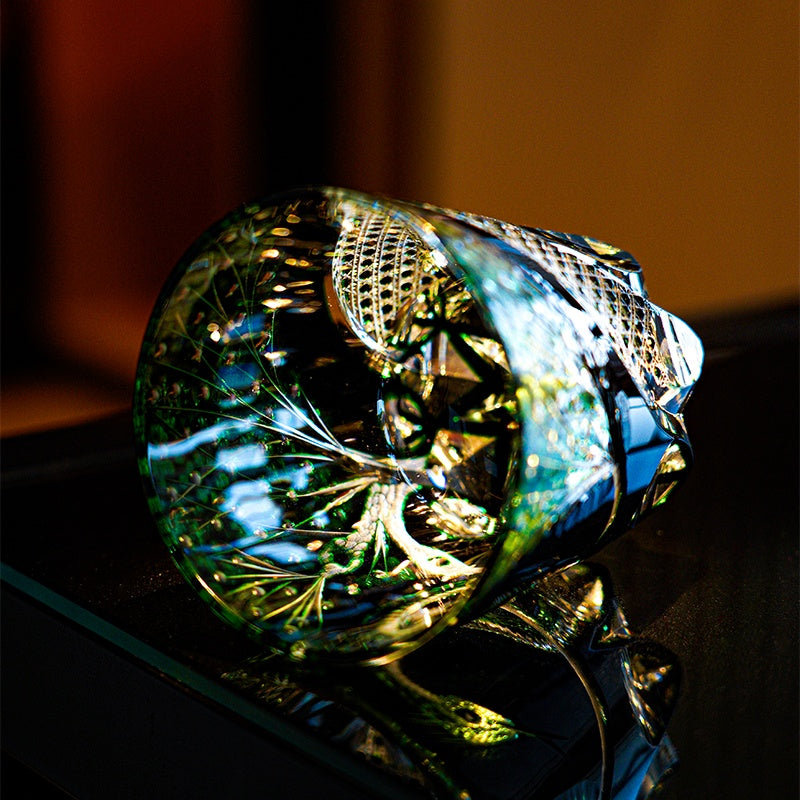
The deep cuts at the base enhance the refraction of light through whisky or any poured spirit, making each sip feel elevated and immersive. This glass is a tribute to myth, precision, and enduring artistry.
Whether displayed as a centerpiece or used for a contemplative drink, the Green Serpent Whisky Glass delivers elegance with an edge.
• Craft: Edo Kiriko
• Product:
1x Whisky Glass
1x Wooden Box
Materials
Specifications
Product Care
Shipping
Times
Orders take 1-2 business days to process after placing the order before shipping out.
Standard Shipping Times
• North America
United States (Mainland): 5 - 12 days
Alaska, Hawaii, and other US regions: 10 - 20 days
Canada: 5 - 14 days
Mexico: 10 - 17 days
• Europe: 5 - 12 days
• Australia/New Zealand: 6 - 14 days
• Asia
Southeast Asia: 5 - 8 days
Other Regions: 5 - 14 days
• Latin America: 10 - 20 days
• Other Countries: 10- 20 days
Express Shipping Times: 4 - 8 days
Available in the Following Countries:
• United States(Mainland)
• United Kingdom
• France
• Germany
• Italy
• Austria
• Spain
• Netherlands
Priority Shipping Times: 3 - 5 days
Available in the Following Countries:
• United States(Mainland)
• Canada
• United Kingdom
• France
• Germany
• Italy
• Austria
• Spain
• Portugal
• Netherlands
• Australia
• New Zealand
• United Arab Emirates
• Saudi Arabia
Return, Refund & Exchanges
We offer a 7-day return & exchange policy. For detailed information Return, Refund & Exchanges
Choose options

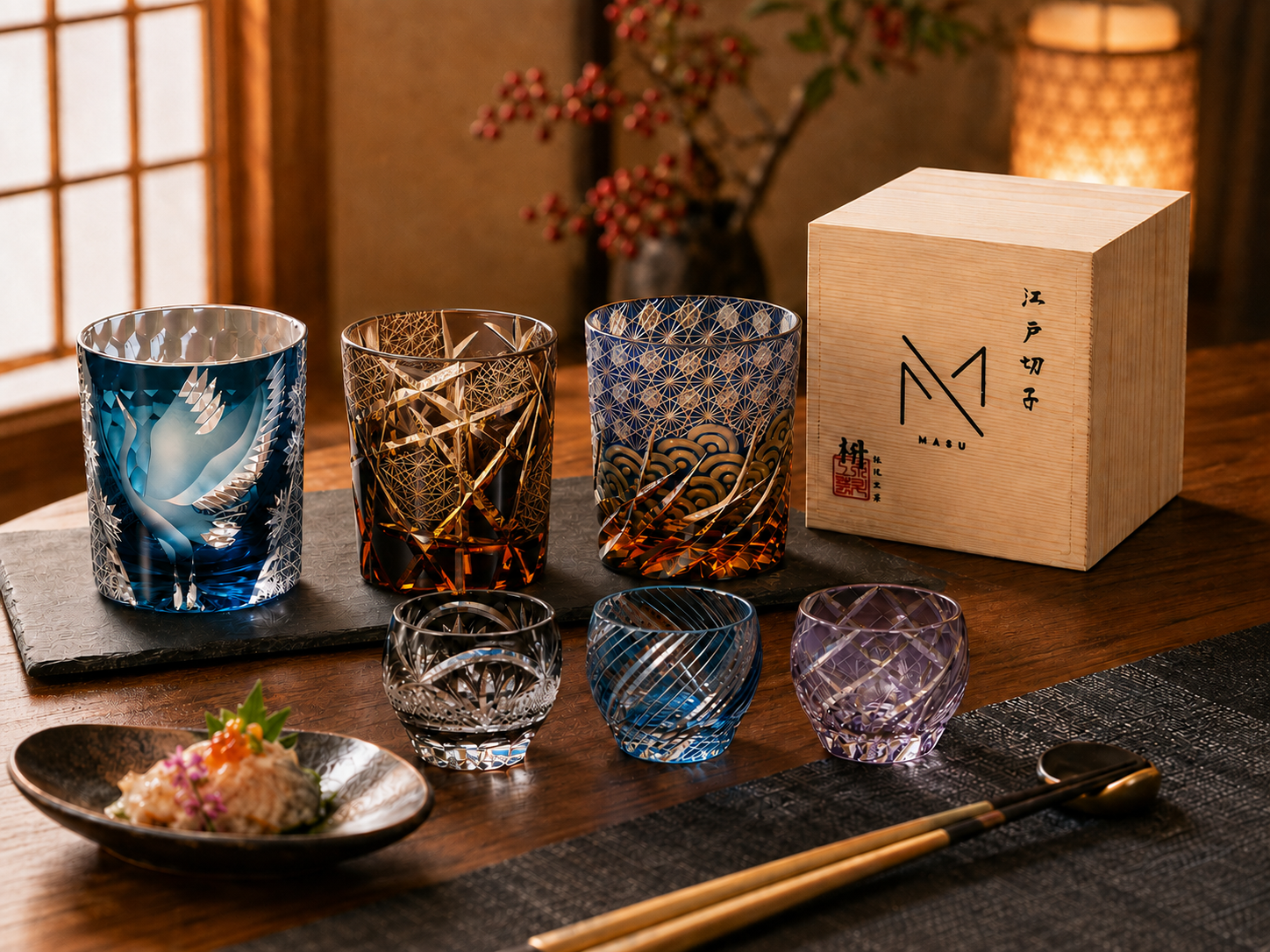
Crafting of Edo Kiriko
意匠
Design
Each Edo Kiriko piece begins with the design. MASU’s Edo Kiriko artisans carefully consider the arrangement, scale and balance of the pattern, planning how each motif will flow naturally around the form of the glass.
Rather than drawing the entire pattern onto the surface, the artisan works from an understanding of traditional geometry, proportion and the individual character of each piece. These early decisions establish the visual harmony and precise framework that will guide every stage of craftsmanship to follow.

割り出し
Pattern Marking
Once the design has been established, MASU’s artisans begin waridashi (割り出し), marking essential reference lines and points directly onto the surface of the glass. These measured guidelines establish the position, spacing and symmetry of the pattern before cutting begins.
Only the necessary references are marked rather than the complete design. From these simple guides, the artisan relies on a trained eye, steady hand and years of experience to translate the intended pattern accurately across the curved surface of the glass.

粗摺り
First Cuts
The first cutting stage, known as arazuri (粗摺り), establishes the fundamental structure of the design. MASU’s Edo Kiriko artisans guide the glass carefully against a rotating cutting wheel, gradually forming the principal lines and broader elements of the pattern.
These initial cuts are developed progressively rather than being brought immediately to their final depth and width. The artisan continuously adjusts the angle, pressure and position of the glass by hand, creating a precise foundation for the more intricate cutting stages that follow.

三番掛け
Detailed Cutting
Building upon the initial cuts, MASU’s artisans move into sanbangake (三番掛け), developing the pattern with finer, smoother and increasingly detailed cuts. The glass is carefully guided against the rotating wheel as smaller geometric elements and precise intersections begin to take shape.
At this stage, the full complexity of the design gradually emerges. Each movement requires careful control of angle and pressure, while the artisan’s trained eye ensures that the pattern remains balanced, rhythmic and symmetrical around the glass.

石掛け
Adjustments & Refinement
Once the main pattern has taken shape, the glass progresses to ishikake (石掛け), where the individual cuts are carefully refined using finer abrasive tools and whetstones. MASU’s Edo Kiriko artisans smooth the worked surfaces while sharpening delicate edges, intersections and smaller details.
This is an important final stage of the cutting process, requiring particular care to preserve the intended depth and character of each line. Through patient refinement, the individual cuts come together as a precise and harmonious composition.

磨き・バフ掛け
Polishing
After cutting and refinement, the worked surfaces of the glass remain comparatively matte and must be carefully polished to reveal their clarity and brilliance. During migaki (磨き), MASU’s artisans progressively smooth and polish the cut surfaces, restoring transparency to the intricate pattern.
The finishing continues with bafugake (バフ掛け), a final buffing process that further refines the surface and enhances its lustre. As clarity returns to each precisely cut facet, light begins to travel through the pattern with the depth, contrast and distinctive sparkle characteristic of Edo Kiriko.

最終検品
Final Quality Inspection
Once the finishing process is complete, every MASU Edo Kiriko piece undergoes a careful final inspection. Held under strong light and examined from different angles, the finished glass is reviewed for the precision and symmetry of its pattern, the clarity of its cut surfaces and the consistency of the overall finish.
The artisan also examines the interaction of light across the individual facets, looking closely for details that may only become visible when the glass is illuminated. Only after the craftsmanship has been carefully reviewed is the piece considered complete and ready to leave the hands of the artisan.
The Hands Behind the Glass
Precision in Every Cut
A Study in Color & Light
Intricate Cuts, Shifting Reflections